
When a Tree Can No Longer Stay
Tree Removal in Jackson for hazardous, dying, or structurally compromised trees on residential and rural properties
Dead or structurally failing trees create a visible and growing risk that worsens the longer removal is delayed. A1 Outdoor Services handles tree removal in Jackson, working with property owners who have trees pressing against structures, splitting at the trunk, or showing advanced decay that makes the canopy unpredictable. Whether the tree is standing in a tight side yard or anchored in open acreage, each removal is scoped based on what the site actually presents.
The removal process begins with a ground-level evaluation of the tree's lean, root exposure, and proximity to structures, utility lines, or fencing before any cutting starts. Jackson's property mix includes a range of single-family lots, rural parcels, and properties with mature tree lines that were established decades ago—many of those older trees now show the kind of structural fatigue that isn't visible until a limb fails. The sequence of cuts, rigging points, and drop zones is determined by what the tree and the surrounding property allow, not by a standard formula applied to every job.
Schedule an on-site evaluation with A1 Outdoor Services to assess the tree's condition and determine the safest removal approach for your property.
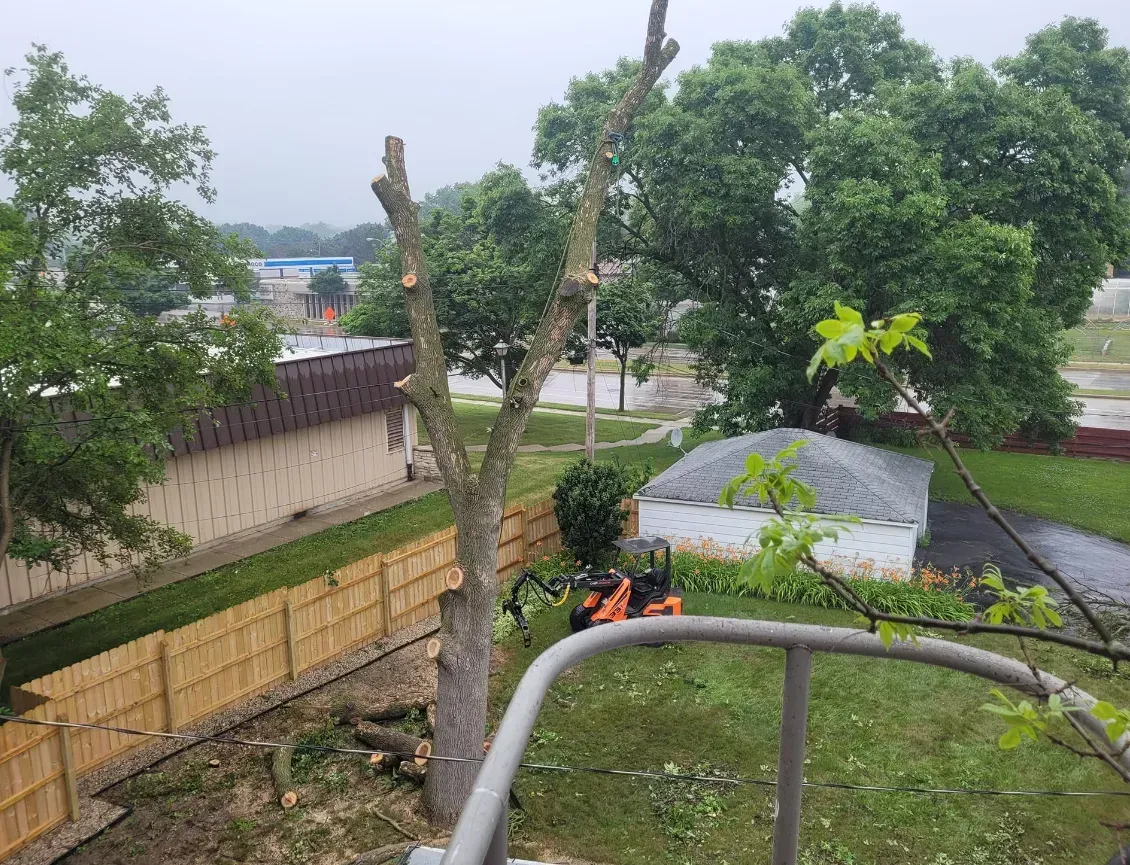
What Proper Tree Removal Requires
Controlled tree removal relies on sequenced sectional cutting when full-length felling isn't an option—a common condition on the residential lots common in Jackson where neighboring structures, driveways, or underground utilities limit the fall zone. Rigging systems allow sections to be lowered rather than dropped, which protects surfaces below and gives the crew control over where material lands throughout the job.
Once the tree is down, the site looks immediately different: the canopy is gone, trunk sections are staged, and the area that was shaded or obstructed is now open. Debris is cleared and hauled from the property so what remains is a clean work area rather than a pile of material left for the property owner to manage. The stump remains unless stump grinding is added as a separate step.
Root systems from large removed trees will continue to occupy the ground below, which matters if you're planning to replant, grade, or install lawn features in the same area. That factor affects what comes next and is worth discussing before the removal is complete so the site is prepared appropriately for its intended use.
Answers About How the Work Is Done
Tree removal involves more decisions than most property owners expect, particularly on properties where space is limited or the tree is large. These questions address how that work actually gets done.
What determines whether a tree is removed in sections versus felled in one piece?
The available fall zone drives that decision—if structures, fencing, or neighboring trees are within range of the full-length fall, sectional removal is used so each piece can be controlled on its way down.
How is the drop zone protected during removal?
Rigging lines attached to upper sections allow material to be guided as it descends rather than falling freely, which reduces impact on lawn surfaces, driveways, and nearby plantings.
What happens to the wood and debris after the tree is down?
Trunk sections, limbs, and brush are cleared and hauled from the property as part of the removal, leaving the site ready for whatever comes next.
Why do older trees on established Jackson properties require extra evaluation before removal begins?
Trees planted decades ago on residential lots often have root systems that have grown into buried infrastructure, and the canopy structure may have been shaped by previous pruning in ways that affect how the tree holds together during cutting.
A1 Outdoor Services works through the full removal from initial evaluation to site clearing, so the property is left in a usable condition rather than mid-process. Connect with A1 Outdoor Services to arrange a property walkthrough and discuss the specific conditions of your tree and site.