
Fallen Trees Require Immediate Systematic Response
Storm Damage and Emergency Tree Service in Jackson for trees down on structures, blocking access, or creating immediate hazards after a severe event
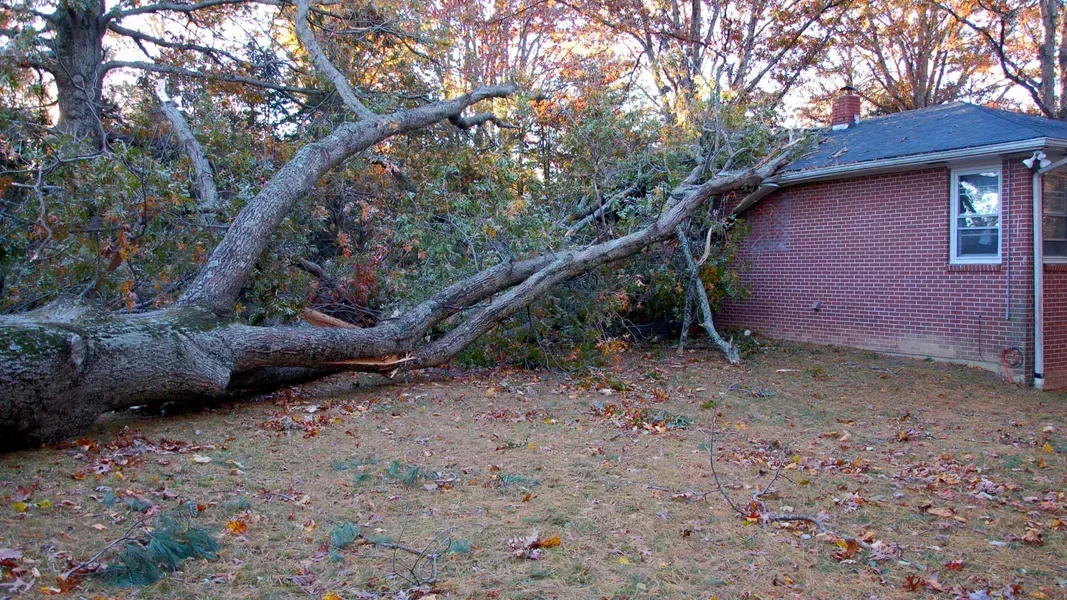
Storm damage tree work operates under conditions that routine removal does not: limbs are fractured rather than cut, root plates may be partially lifted, and trees that appear stable may be under tension from contact with structures or other trees. A1 Outdoor Services responds to storm damage and emergency tree situations in Jackson, working through the immediate hazard—a tree on a roof, a blocked driveway, a limb hanging over an entry point—with the methodical approach that compromised material actually requires.
Jackson's established residential areas include many properties with large, mature trees that were planted when the lots were first developed. Those trees have had decades to grow close to structures, utility lines, and neighboring properties, which means storm damage rarely involves a tree falling cleanly into open space. More often, the material is tangled into a roofline, lodged against a fence, or leaning against another tree—each of those configurations requires a different entry point and a different sequence for releasing the load safely before any material is moved.
Report your storm damage situation to A1 Outdoor Services so the scope of the hazard can be assessed and the appropriate equipment and approach can be determined before work begins.
Why the Sequence Matters in Emergency Tree Work
Storm-damaged trees frequently hold tension in directions that aren't immediately visible from the ground. A limb that looks as though it's simply resting on a roof may be pinning material underneath, creating a load that releases suddenly when the first cut is made. Identifying those tension points before cutting starts—by reading the bend and contact points of the material—determines where the first cut goes and what direction the material moves when it does. Cutting from the wrong position on a tensioned limb produces a result that is both unpredictable and fast.
After the immediate hazard is cleared, the property changes from a place where access and safety are compromised to one where the damage is visible and containable. The tree is off the structure, the blocked area is accessible, and what remains is a cleanup and assessment of what needs to be removed versus what can be retained. A1 Outdoor Services documents the work completed on site so the property owner has a clear record of what was addressed, which is relevant for any insurance documentation that follows.
Emergency response handles the immediate hazard; it doesn't automatically include full debris removal, stump grinding, or remediation of secondary damage unless that scope is confirmed. Once the critical material is handled, a follow-up assessment identifies what additional work remains—additional weakened limbs in the canopy, secondary trees affected by the same event, or structural issues with trees that didn't fall but were significantly stressed during the storm..
Answers About How Storm Response Work Gets Done
Emergency tree work after a storm involves conditions that standard tree removal does not. These questions address what to expect from the process and how decisions get made when a tree is in an unsafe position.
How is tension read in a storm-damaged limb or tree before any cuts are made?
The crew examines the bend of the wood, the contact points where the material rests, and whether the root plate has shifted—those three factors together indicate where the stored energy in the material is and which direction it will release when cut.
What determines whether a partially fallen tree can be safely stabilized versus must be fully removed?
Trees with significant root plate uplift or those in contact with a structure under load generally cannot be stabilized safely and need to be removed in controlled sections; trees that are leaning but still root-anchored may be candidates for cable support depending on the species and the extent of damage.
Why does storm work on older Jackson residential properties require extra assessment before cutting begins?
Large trees on established lots have often grown into proximity with buried utilities, irrigation systems, and neighboring structures over decades, and the storm event may have shifted root systems that were previously stable near those features.
What should a property owner do before the crew arrives to clear storm-damaged material?
Keep people and vehicles away from the affected area, photograph the damage from a safe distance for insurance purposes, and identify any buried utility lines or service entries on the structure that may be under or near the fallen material.
How do you determine which other trees on the property may have been weakened by the same storm event?
Trees adjacent to a failure should be evaluated for root plate movement, crown damage, and structural lean that wasn't present before the event—those are the indicators that secondary hazards exist beyond the tree that actually came down.
A1 Outdoor Services works through storm damage systematically—clearing the immediate hazard first, then assessing what remains once the critical material is handled. When a tree is down or hanging on your property, contact A1 Outdoor Services directly to report the situation and get the response process started.